Understanding the Mill: what the 2020 condition survey revealed
What the 2020 condition survey revealed about Strand Spinning Mill’s historic fabric, repair needs and approach to conservation
Before regeneration comes understanding
Before Portview could plan the long-term regeneration of Strand Spinning Mill, it first needed a detailed picture of what had survived and what condition it was in. In December 2020, Consarc Conservation completed a Historic Fabric Condition Report covering the principal listed blocks of the complex. The survey did more than catalogue defects. It recorded the layers of the building’s history: the original 1911 mill, wartime damage, post-war rebuilding and additions, later changes made as the site became a business centre, and the industrial features that remain visible today. That evidence matters because every repair decision has to balance practical performance with the conservation of a Grade B2 listed building.
A building that carries its history
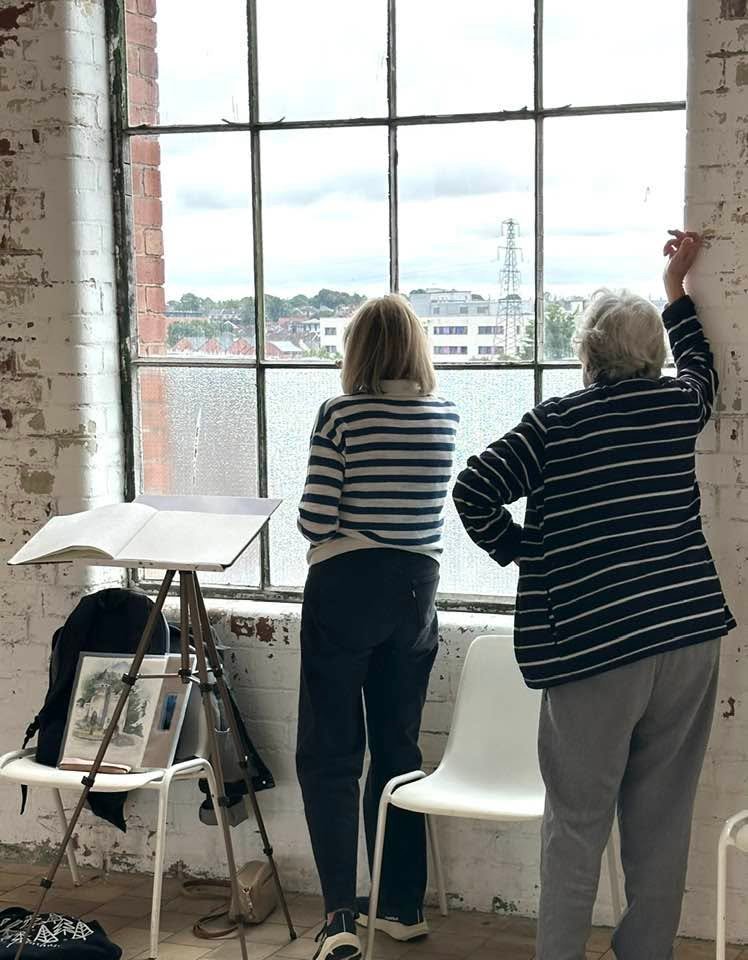
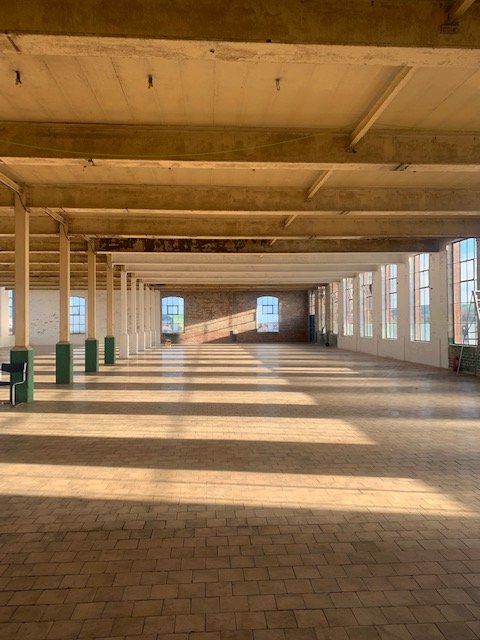
The survey shows how the Mill’s history can still be read in its fabric. Blocks A and B were both damaged in the 1941 Blitz. Block A lost its northern end and was never rebuilt; a later sawtooth-roofed storey changed its roofline. Block B combines original 1911 fabric with a later northern section rebuilt after the damage. Block C, with its broad clear-span interior and sawtooth roof, was added in the late 1940s. Elsewhere, cast-iron columns, steel windows, sandstone cills and copings, cobbled yards and the Engine Room survive as evidence of how the complex functioned. The Engine Room itself retains architectural details associated with the original power system that drove machinery across the mill.
The conservation challenge
More than a century of use has left a complex set of repair needs. The 2020 survey identified recurring problems with water ingress, ageing roof coverings and glazing, rainwater goods, pointing, historic steel windows, brickwork, stonework and parapets. Some of the most visible problems were caused by water getting into the building fabric and by corrosion of metal elements. In parts of the complex, earlier alterations and repairs had also introduced materials or details that were not sympathetic to the original building. The report therefore prioritised work as urgent, essential or optimal and recommended that repairs could be phased block by block as funding became available.
Repairing the Mill without erasing it
The most important principle in the condition report was not simply that repairs were needed, but how they should be approached. Consarc recommended sound conservation principles: retain as much historic fabric as possible and preserve the patina that makes the complex a distinctive piece of Belfast’s industrial heritage. For Portview, that remains central to the regeneration challenge. The objective is not to make a century-old mill look new. It is to make it safe, useful and sustainable while allowing the building to continue showing its age, its changes and its working history. The 2020 survey became one of the key pieces of evidence informing the longer-term approach to Strand Spinning Mill.